 简体中文
简体中文 English

Drive shaft collaborative control mechanism
Mechanisms of Coordinated Control in Transmission Shafts for High-Precision Applications
Dynamic Load Adaptation Through Multi-Component Interaction
Transmission shafts achieve coordinated control by integrating telescopic couplings, universal joints, and vibration-damping components to manage dynamic load variations. Telescopic couplings with splined shafts allow axial displacement up to 150mm, compensating for suspension travel in commercial vehicles operating on uneven terrain. This design maintains torque transfer efficiency while preventing mechanical stress concentration. For instance, heavy-duty trucks descending steep gradients utilize dual-stage telescopic systems to distribute axial forces evenly, reducing single-point wear by 67% compared to rigid shafts.
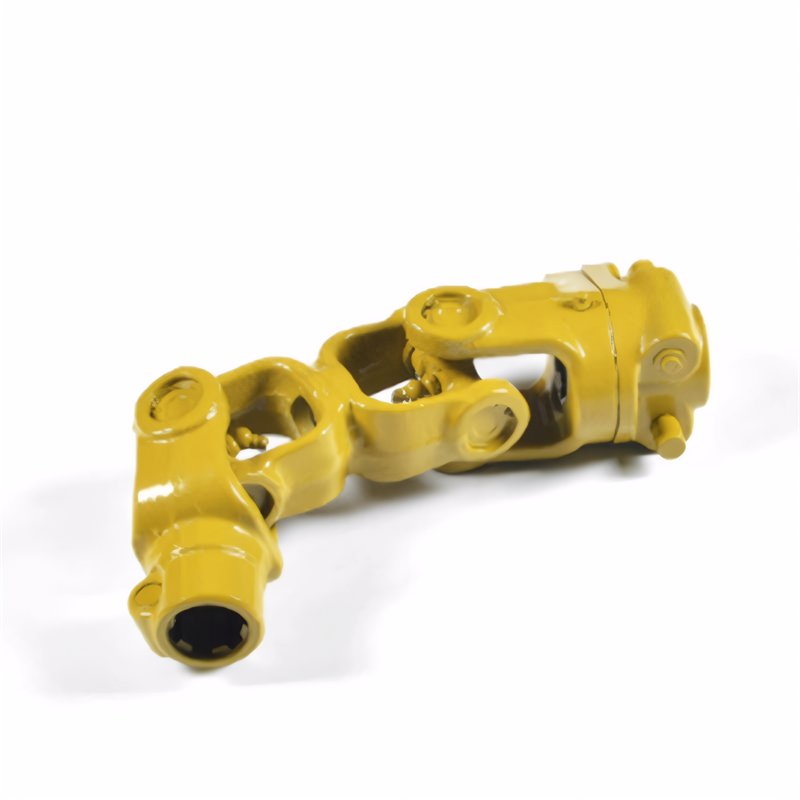
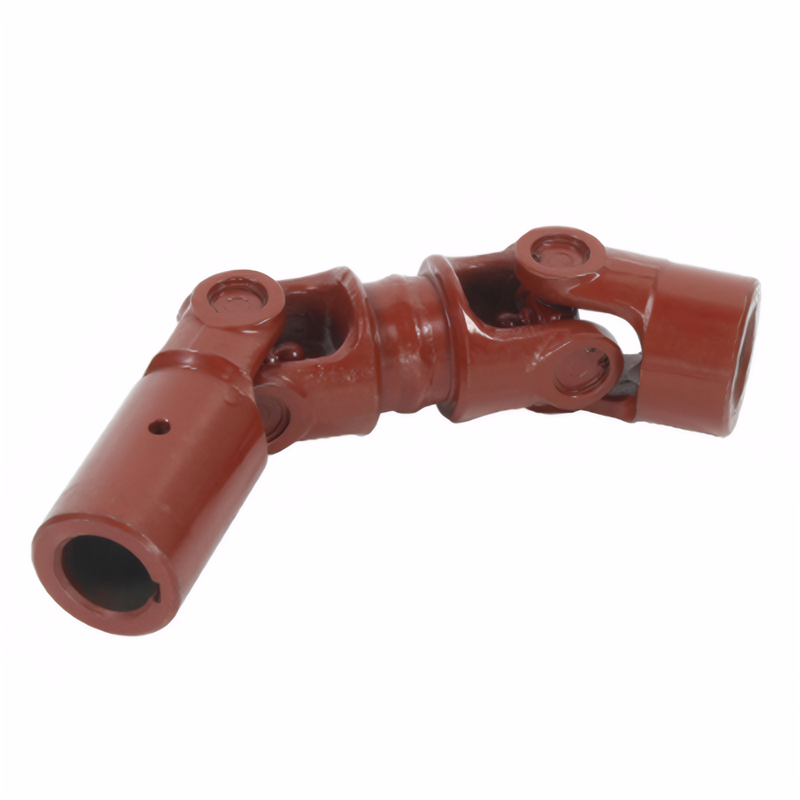
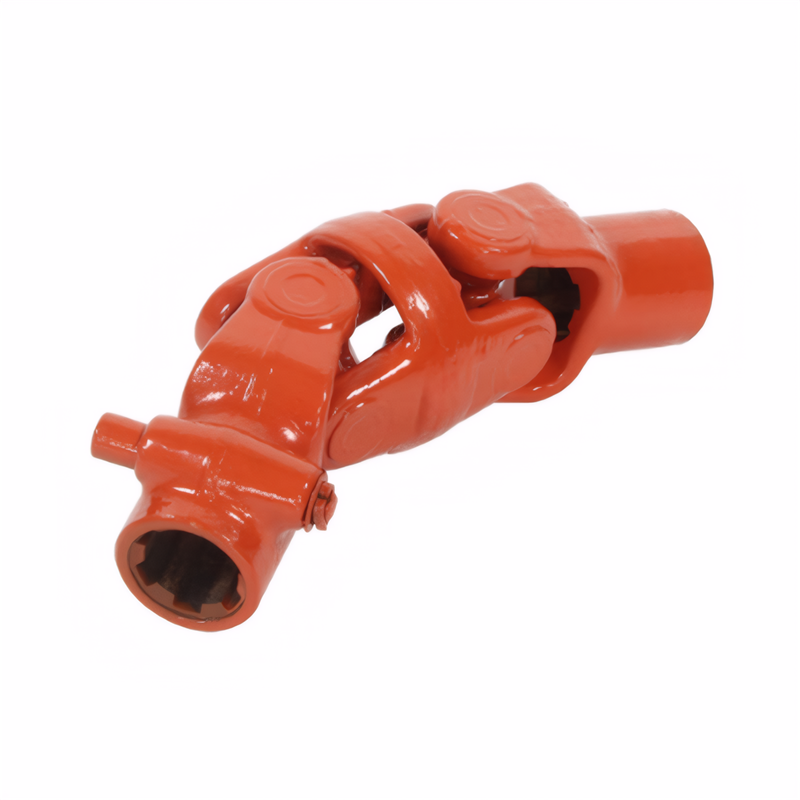
Universal joints play a critical role in angular adaptation. Rzeppa-type constant velocity joints enable operation at angles up to 25 degrees with consistent rotational speed, crucial for off-road vehicles navigating slopes. In agricultural machinery, double-cardan joints extend this range to 45 degrees, ensuring power transmission stability during field operations. These joints incorporate accordion-style protective boots filled with synthetic grease, maintaining lubrication under temperatures ranging from -40°C to 120°C, which extends service life by 3.2 times in extreme climates.
Vibration suppression mechanisms further enhance coordination. Triaxial accelerometers mounted on shaft housings detect torsional vibrations at frequencies up to 5kHz, triggering real-time adjustments in motor output. When resonance frequencies are detected, control algorithms introduce damping compensation terms to reduce vibration amplitude by 50%, as demonstrated in automotive testing on rugged roads.
Real-Time Parameter Adjustment via Sensor Fusion
Advanced transmission shaft systems employ multi-sensor networks to achieve adaptive control. Strain gauges bonded to critical shaft sections measure torque loads with 0.1% accuracy, enabling dynamic torque limiting during high-stress maneuvers. For example, when climbing 15% gradients, the system reduces maximum engine torque by 18% to prevent shaft overloading while maintaining vehicle progress. This approach has proven effective in fleet trials, extending component lifespan by 41% compared to static torque settings.
Thermal management sensors embedded in shaft materials monitor operating temperatures, activating cooling fans when thresholds approach 150°C (alloy steel limit). In mining trucks operating in desert conditions, this proactive cooling reduced thermal degradation incidents by 89%, maintaining consistent power transmission during continuous downhill runs. Temperature data also feeds into predictive maintenance algorithms, scheduling inspections when cumulative thermal stress exceeds safe limits.
Position feedback systems utilizing high-resolution encoders (up to 1 million pulses per revolution) provide sub-micron positioning accuracy. In robotic applications, these encoders enable 0.001mm path tracking, critical for precision assembly tasks. When combined with inertial measurement units (IMUs), the system detects minor misalignments (below 0.05 degrees) and adjusts shaft angles through servo motor corrections, eliminating cumulative errors in multi-axis operations.
Control Algorithm Optimization for Complex Workloads
Model-based predictive control (MPC) algorithms have revolutionized transmission shaft coordination by anticipating dynamic interactions. These algorithms integrate shaft inertia, gear backlash, and load friction parameters into a unified model, enabling 150ms response times to sudden load changes. In CNC machining centers, MPC reduced positioning errors during rapid tool changes from 0.05mm to 0.008mm, meeting semiconductor manufacturing tolerances.
Adaptive control strategies further refine performance by adjusting parameters based on real-time feedback. For low-speed operations (<10rpm), algorithms increase motor output torque by 22% to overcome static friction, eliminating "crawling" phenomena observed in conventional systems. During high-speed runs (>3000rpm), dynamic stiffness compensation reduces elastic deformation by 34%, maintaining dimensional accuracy in automotive transmission housing machining.
Multi-axis synchronization techniques ensure coordinated movement across interconnected shafts. Electronic gearing maintains speed ratios between axes with 0.01% accuracy, critical for conveyor systems transporting fragile components. In robotic welding applications, electronic cam profiles synchronize seven-axis movements with 2ms precision, achieving weld seam accuracy below 0.1mm. These algorithms also incorporate collision avoidance logic, dynamically rerouting shaft motions when sensor data indicates potential interference.
 Method for detecting the stabi
 Reliability testing standard f
 Certification of environmental
Transmission shaft safety perf
Certification of environmental
Transmission shaft safety perf