 简体中文
简体中文 English

The drive shaft is compatible with the automotive industry standards
Automotive Drive Shaft Industry Standard Compliance: Key Technical Requirements and Adaptability Analysis
Dynamic Balance and Vibration Control Standards
Drive shafts operating at rotational speeds exceeding 1,800 rpm must comply with stringent dynamic balance requirements to minimize vibration-induced wear. The ISO 1940-1 standard defines balance quality grades, with automotive drive shafts typically requiring G40 or higher precision. This translates to residual unbalance values below 20 g·cm per end during initial testing, with allowable residuals increasing to 30 g·cm after rebalancing procedures.
For high-performance vehicles, the threshold tightens to G16 grade, demanding residual unbalance below 0.2% of the component's mass. Testing protocols involve hard-bearing dynamic balancing machines capable of detecting phase angle deviations within ±15° and vibration velocity amplitudes under 2.8 mm/s at operating speeds. These parameters ensure compatibility with engine harmonics and prevent premature failure of adjacent components like universal joints and transmission gears.
The correlation between balance precision and vehicle class becomes evident in empirical data: compact passenger cars with engine displacements below 1.6L typically require G40 compliance, while luxury sedans exceeding 3.0L displacements mandate G16 certification. Heavy-duty commercial vehicles operating at lower RPMs (below 3,500 rpm) adopt G63 standards, balancing cost-effectiveness with durability requirements.
Geometric Tolerance and Dimensional Accuracy
Axial runout specifications vary significantly across vehicle categories. Small passenger cars must maintain end-to-end runout below 0.3 mm, while mid-size SUVs allow tolerances up to 0.6 mm. Heavy-duty trucks operating under higher torque loads permit maximum runout of 1.0 mm, provided the deviation occurs uniformly across the 360° rotation cycle.
Critical dimensional parameters include:
- Spline engagement length: Minimum 25 mm overlap between male and female splines under maximum compression
- Universal joint angular capacity: ≥25° operational range with ±23° phase alignment between yokes
- Axial clearance: ≤0.1 mm for十字轴 (cross-axis) components and ≤0.05 mm for radial bearings
Three-coordinate measuring machines with ±0.002 mm accuracy verify these dimensions during production. For example, the straightness tolerance for axle tubes must not exceed 0.5 mm over the entire length, with wall thickness variations controlled within ±0.15 mm to maintain torsional rigidity.
Material Performance and Environmental Resistance
Material selection follows ASTM and ISO specifications for mechanical properties:
- Surface hardness: HRC 55-60 for axle tubes to resist wear from sliding splines
- Tensile strength: ≥1,000 MPa for critical components like yokes and flanges
- Fatigue life: Minimum 500,000 cycles under simulated torsional loading for passenger car components, escalating to 1 million cycles for commercial vehicles
Environmental adaptability testing includes:
- Salt spray resistance: 500-hour exposure per ISO 9227 without visible corrosion on critical surfaces
- Thermal cycling: -40°C to +85°C transitions with <0.05 mm dimensional change in axle tubes
- Humidity resistance: 95% RH at 40°C for 168 hours without coating degradation
Magnetic particle inspection detects surface cracks as small as 1.5 mm in length, while ultrasonic testing identifies internal voids exceeding 2 mm in diameter. These non-destructive evaluation methods ensure compliance with QC/T 1061 and SAE J2148 standards, which specify fatigue testing protocols and acceptance criteria for universal joint assemblies.
Functional Performance and Safety Verification
Functional testing verifies operational characteristics under simulated conditions:
- Torsional stiffness: Maintain ≤0.5° twist per meter length under maximum rated torque
- Critical speed: Operate ≥20% above maximum engine RPM without resonance excitation
- Noise emission: ≤65 dB(A) at 50 km/h per ISO 362 vehicle interior noise measurement standards
Safety-critical components undergo destructive testing:
- Static torque capacity: Withstand 2.5× rated torque without permanent deformation
- Burst strength: Resist 3× rated torque for 3 seconds without fracture
- Emergency stop: Survive 10 consecutive abrupt decelerations from 100 km/h to 0 without structural failure
These parameters align with GB/T 12609 and ISO 12667 standards, which establish minimum performance thresholds for automotive drive shaft systems. The integration of finite element analysis (FEA) during design phases enables manufacturers to optimize component geometry for both strength and weight efficiency, typically achieving 15-20% mass reduction compared to traditional designs while maintaining safety margins.
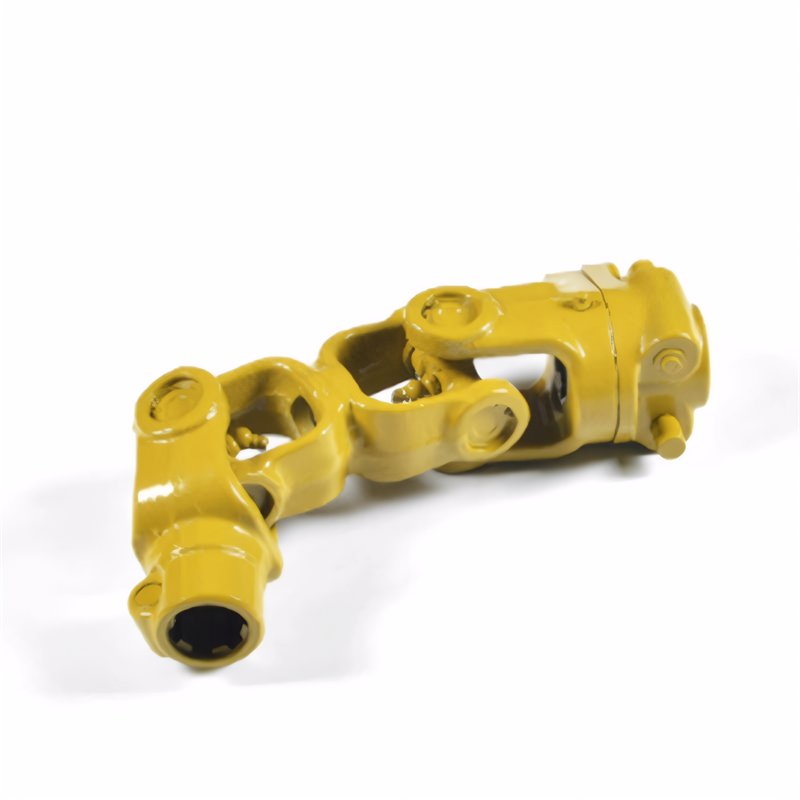 Transmission shaft safety perf
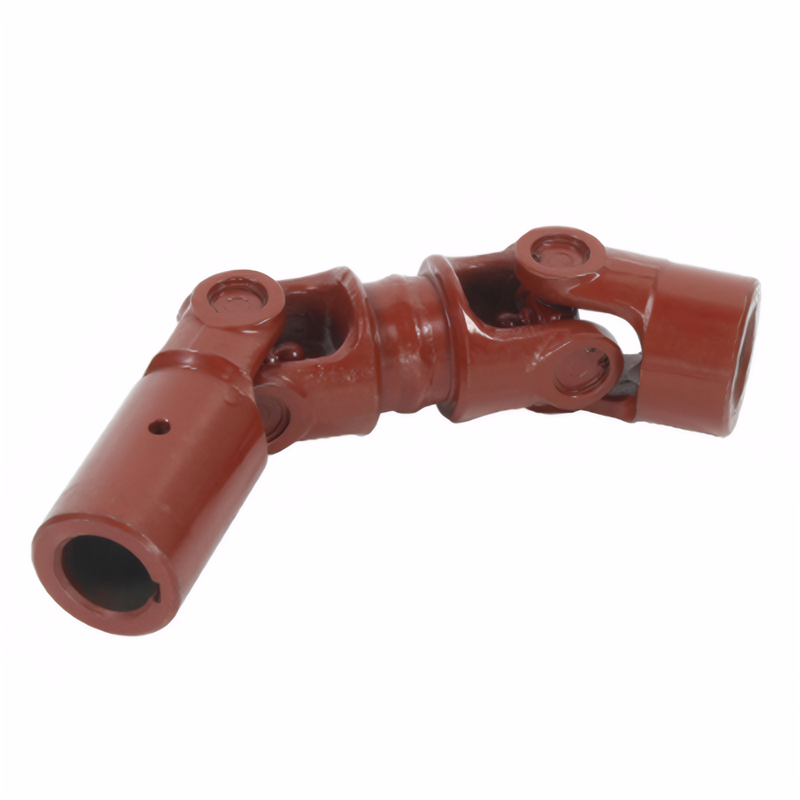 Transmission shaft life test s
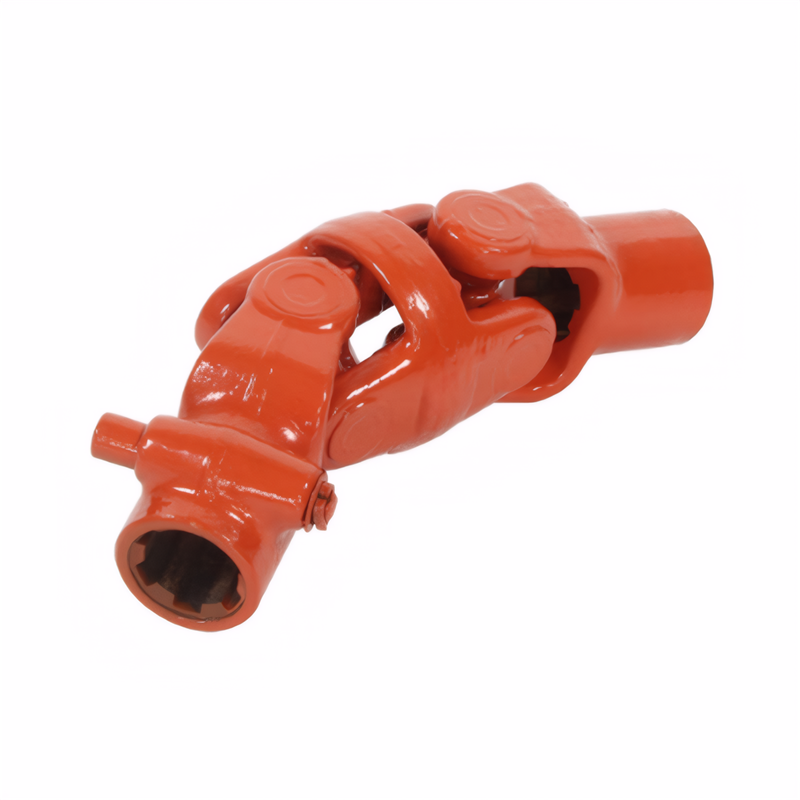 Test requirements for transmis
Standard for batch inspection
Test requirements for transmis
Standard for batch inspection