 简体中文
简体中文 English

Test requirements for transmission shaft type
Comprehensive Requirements for Drive Shaft Type Testing
Dynamic Balance and Rotational Stability Verification
Drive shafts must undergo dynamic balancing tests to eliminate vibrations during high-speed operation. Using precision dynamic balancing machines, the unbalance mass distribution is measured by rotating the shaft at speeds up to 50% of its maximum rated RPM. For automotive applications, the allowable residual unbalance typically adheres to ISO 1940-1 Grade G40 standards, ensuring vibration levels remain below 0.5mm/s at operating speeds.
Rotational stability is further validated through radial runout tests. A dial indicator measures surface deviations as the shaft rotates, with acceptable limits set at ±0.1mm for passenger vehicles and ±0.2mm for heavy-duty trucks. This prevents axial misalignment that could cause premature bearing wear or gear mesh misalignment in transmissions.
Critical speed testing identifies resonance frequencies by incrementally increasing rotational speed while monitoring vibration amplitudes. The shaft must avoid operating near its first critical speed, which is calculated using the formula:
where is modulus of elasticity, is moment of inertia, is material density, is cross-sectional area, and is shaft length.
Torsional Strength and Fatigue Endurance Assessment
Static torsional strength tests apply gradually increasing torque until structural failure occurs. For steel drive shafts, the minimum breaking torque should exceed 1.5 times the maximum rated torque specified in QC/T 29087-1992 standards. This ensures survival under extreme loading conditions such as sudden engine torque spikes or transmission shifts.
Fatigue life testing subjects the shaft to cyclic loading using servo-hydraulic test rigs. The test protocol involves applying alternating torque at 120% of rated load for 500,000 cycles, simulating 10 years of service in commercial vehicles. Acceptance criteria require no visible cracks or permanent deformation, with failure defined as a 10% reduction in torsional stiffness.
For composite drive shafts, additional tests evaluate delamination resistance under torsional shear forces. A specialized fixture applies combined bending and torsional loads while ultrasonic sensors detect interlaminar separation. This is critical for lightweight designs used in electric vehicles, where weight reduction cannot compromise structural integrity.
Material Integrity and Geometric Precision Controls
Material composition verification employs spectroscopy to confirm chemical elements meet design specifications. For alloy steel shafts, carbon content must remain between 0.35–0.45%, with chromium and molybdenum levels optimized for hardenability. This ensures the shaft achieves a surface hardness of HRC28–32 after induction hardening, as required by JB/T 7341.1-2016 standards.
Geometric tolerance checks use coordinate measuring machines (CMMs) to validate critical dimensions. Spline tooth thickness must conform to ISO 8643:2017 tolerances of ±0.03mm, while concentricity between bearing journals cannot exceed 0.05mm. These measurements prevent misalignment in universal joints, which could induce angular velocity variations exceeding 2% during operation.
Non-destructive testing (NDT) methods include magnetic particle inspection for surface cracks and ultrasonic testing for subsurface defects. A 5MHz phased array probe scans welded joints at 200mm/s, detecting flaws as small as φ0.5mm. This is particularly important for mining equipment shafts exposed to abrasive environments, where surface defects could propagate rapidly under heavy loads.
Environmental Adaptability Validation
Corrosion resistance tests simulate harsh operating conditions using salt spray chambers. Samples endure 1,000 hours of 5% NaCl exposure at 35°C, with evaluation criteria requiring no more than 10% surface rust coverage. For marine applications, additional cyclic corrosion tests combine salt spray with UV exposure and humidity cycling to replicate offshore environments.
Thermal shock testing evaluates dimensional stability across operating temperatures. Shafts are cycled between -40°C and 200°C while measuring length changes with laser interferometers. Acceptable limits follow ASTM D695 specifications, ensuring thermal expansion coefficients remain within ±5% of design values to prevent seal failures in differential housings.
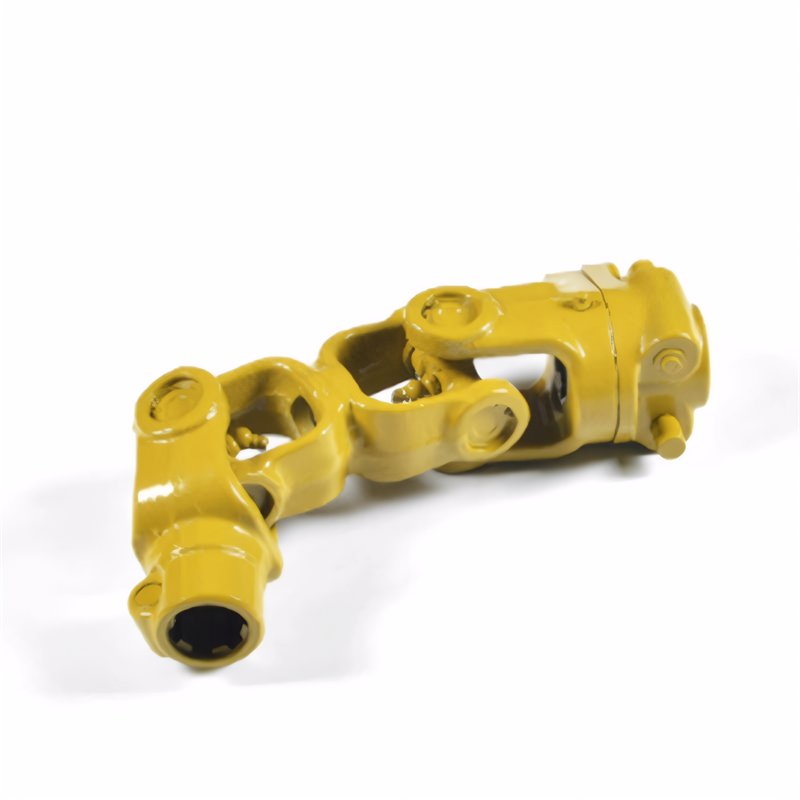 Transmission shaft safety perf
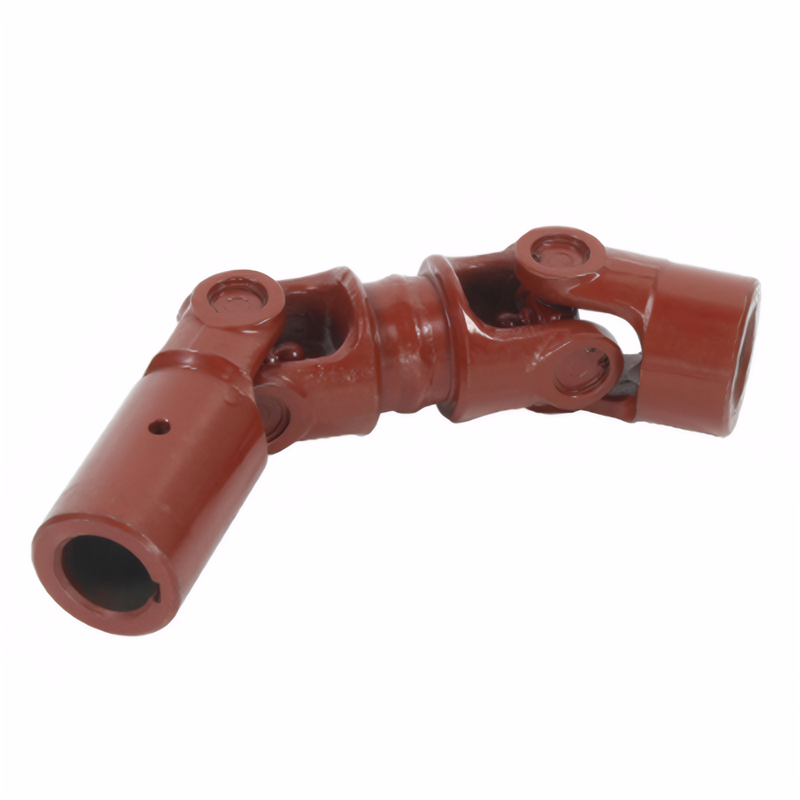 Transmission shaft life test s
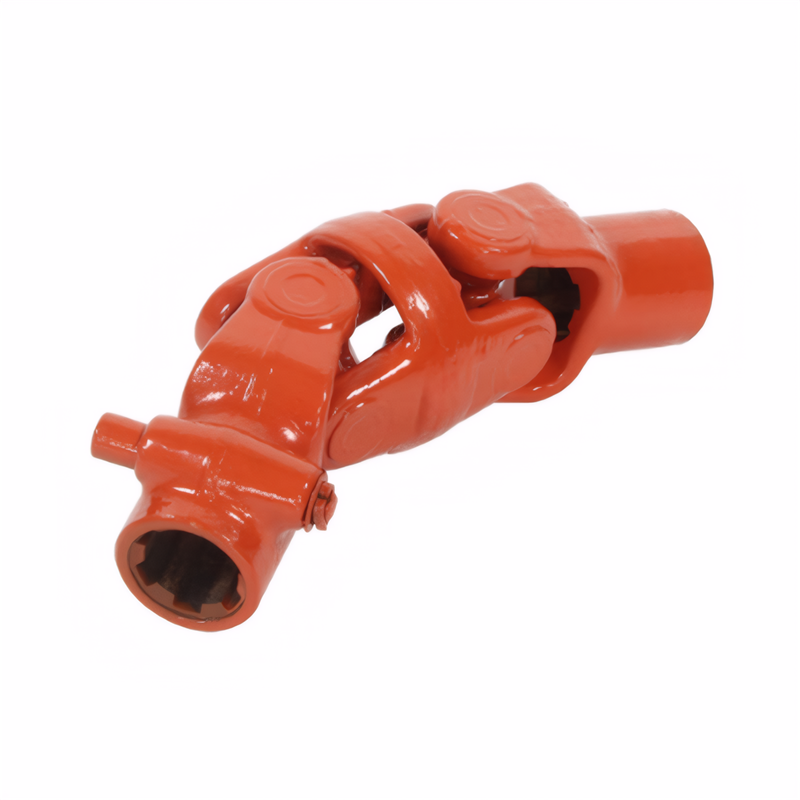 Test requirements for transmis
Standard for batch inspection
Test requirements for transmis
Standard for batch inspection